ZINARA, the Zimbabwe National Road Administration, lists a 12-month vehicle licence at ZWG 3,360 for a car up to 1,500 kg, under Statutory Instrument 67 of 2024, in force from 28 October 2024. That is the figure on ZINARA's licensing page, read on 21 November 2026.
This guide walks through the three mass bands that matter for cars, how your car's mass decides which band you fall into, and what the fee leaves out.
Quick Answer
- A 12-month vehicle licence for a car up to 1,500 kg is ZWG 3,360, per the ZINARA licensing page, checked 21 Nov 2026.
- The next two bands are ZWG 4,200 (1,500 to 2,250 kg) and ZWG 5,040 (2,251 to 3,000 kg).
- The band follows the car's mass, not its make or model.
- ZINARA calls the fees "indicative" and "subject to change".
- Confirm your car's mass and the current fee with your nearest ZINARA office before you budget.
What does the ZINARA fee table say?
ZINARA's licensing page publishes one fee table for every class of motor vehicle in Zimbabwe. For passenger cars and light vehicles, the first three rows are the ones that matter. Each row shows a mass class, ZINARA's published index fee per term in US$, and the ZWG fee for a 12-month licence.
| Mass class |
ZINARA index fee (US$, per term) |
12-month licence fee (ZWG) |
| Up to 1,500 kg |
40 |
3,360 |
| 1,500 to 2,250 kg |
50 |
4,200 |
| 2,251 to 3,000 kg |
60 |
5,040 |
Source: ZINARA licensing page, checked 21 Nov 2026. ZINARA describes these fees as indicative and subject to change.
ZINARA's page lists the fees under Statutory Instrument 67 of 2024. The US$ column is ZINARA's own index figure, shown here exactly as published. It isn't an exchange-rate working, and the ZWG figure stands on its own.
ZINARA's warning under the table says fees are indicative and subject to change, so treat these numbers as a budgeting guide, not a quote.
How does your car's mass set the band?
The licence fee follows a mass class, and nothing else. A small hatchback and a seven-seat people carrier can carry the same badge and still sit in different bands. That is why "how much is the licence for a Toyota?" has no single answer, while "how much for a car up to 1,500 kg?" does.
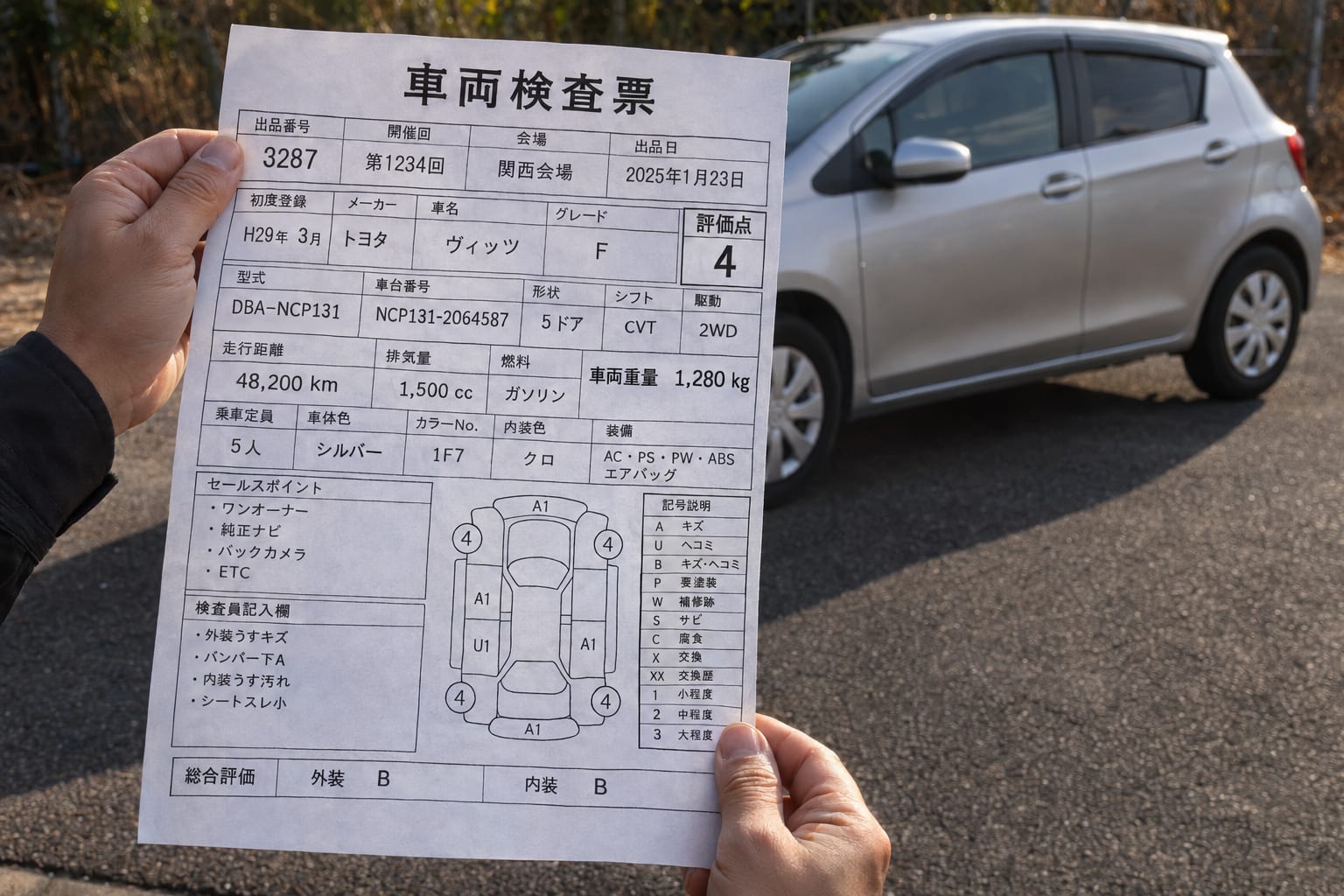 Illustration: The mass figure on the auction sheet is the first clue to your ZINARA licence band (illustration).
The 1,500 kg overlap
The first two bands both include 1,500 kg. "Up to 1,500 kg" and "1,500 kg to 2,250 kg" meet at the same number, and the ZINARA page doesn't say which band applies to a car that weighs exactly 1,500 kg. If your car sits right on that line, the only safe step is to ask ZINARA directly before you pay.
Which mass counts?
The ZINARA page doesn't state which mass figure it uses to place a vehicle. It also doesn't explain how its classes line up with the kerb weight on a Japanese specification or auction sheet.
So a Japanese spec-sheet weight is a clue, not proof of your band.
A practical check
Start with the mass line on the car's auction sheet, the official condition report issued at the Japanese auction. Compare it with the manufacturer's specification for that model code. Then take both figures to ZINARA and ask which class applies. Light hatchbacks such as the Honda Fit and the Nissan Note are small and frugal, but even here, confirm the band from the car's own paperwork rather than assuming it.
What does the licence fee cover, and what doesn't it?
The ZWG 3,360 figure buys one thing: a vehicle licence for a single 12-month term on a car in the lightest band. It's the fee behind the licence disc on your windscreen.
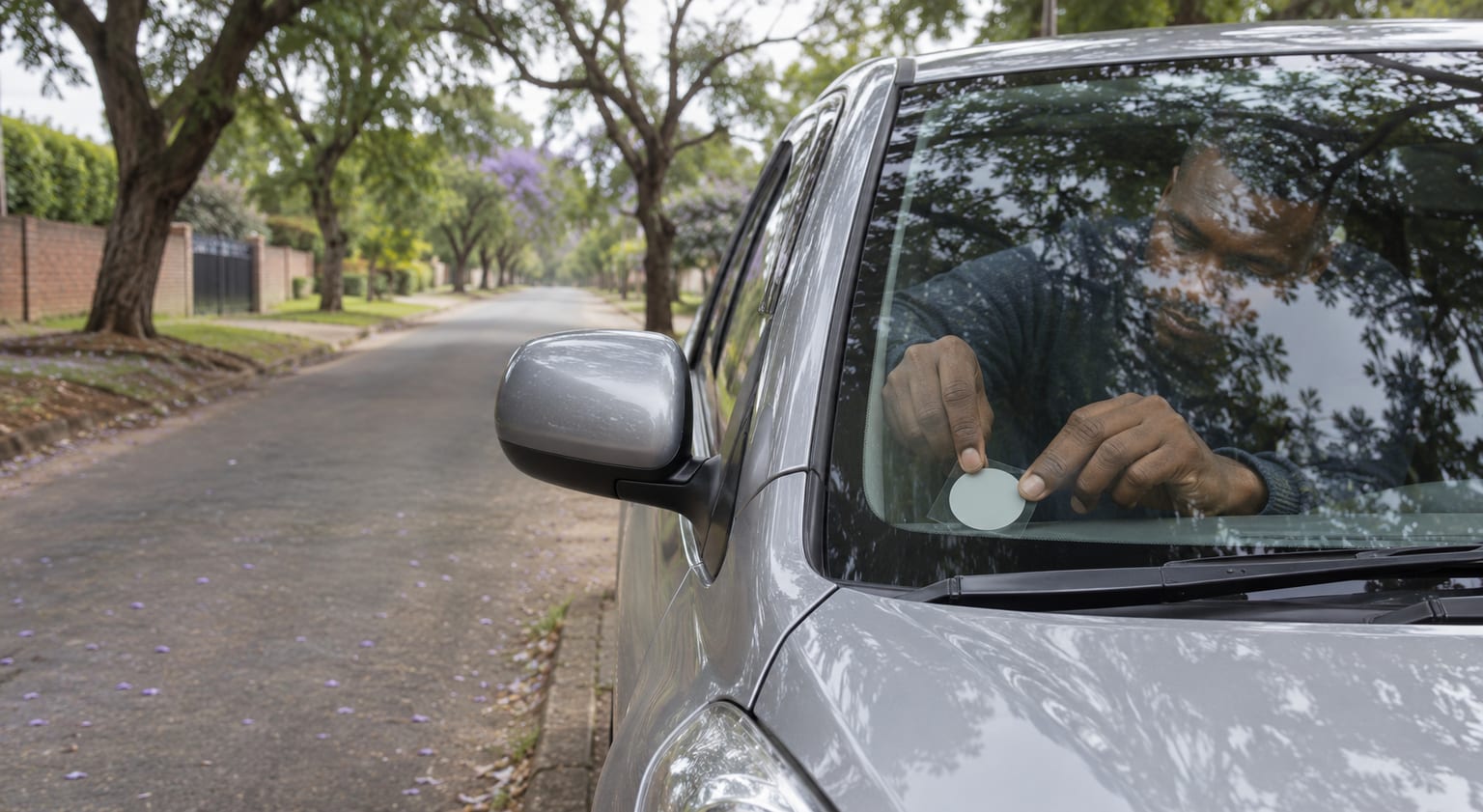 Illustration: A person applies a round disc to the inside of a car windscreen.
The licence fee does not include:
- Registration and number plates. These are separate costs handled through the vehicle registration process. The ZINARA table doesn't cover them, and this guide quotes no figure for them. Check the current amounts with the relevant registration office.
- Insurance and the radio licence. ZINARA lists both as products you can buy alongside the licence, with the radio licence marked optional. Their costs sit outside the fee table.
- The cost of importing the car. Duty, VAT and clearance are one-off import costs, covered in the next section.
Is the licence fee part of the cost of getting the car here?
No. The yearly licence is a running cost you pay for as long as you own the car. Import costs such as duty, VAT and clearance are paid once, when the car is cleared, and they follow separate rules that this guide does not cover.
Where Carbarn fits in
Carbarn Zimbabwe lists Japanese cars with two reports before you pay: the official Japanese auction sheet and an in-house Carbarn inspector report.
The pre-export inspection in Japan is arranged and included. Cars ship RoRo to Durban and then travel overland into Zimbabwe. The quoted price covers the vehicle, shipping and inspection. Duty, VAT and customs clearance are paid separately.
You can browse the full inventory or start with Toyota models.
What this does not show
The ZINARA table gives licence fees by mass class only. It doesn't say which mass measure places a car in a class, which class applies to a car of exactly 1,500 kg, or what registration, plates, insurance and import costs add. ZINARA calls the fees indicative and subject to change.
Method and sources
- ZINARA licensing page, Motor Vehicle Licensing Fees table under Statutory Instrument 67 of 2024, in force from 28 October 2024: the classes up to 1,500 kg, 1,500 to 2,250 kg and 2,251 to 3,000 kg, with the US$ index fee per term and the ZWG fee for 12 months. Read 21 November 2026.