Zimbabwe imported US$2.8 million of petrol-hybrid passenger cars in September 2026, according to ZimStat's Imports Classified by Product table for September 2026, checked on 23 November 2026. The exact figure is US$2,794,119.2 under HS code 87034000, and the table is listed on the ZimStat external trade page.
If you're weighing up a used Japanese hybrid, you've probably wondered whether many other Zimbabweans are doing the same. This post explains what that number measures and what to do with it.
Quick Answer
- ZimStat's Imports Classified by Product table records US$2.8 million (US$2,794,119.2) of petrol-hybrid vehicle imports (HS 87034000) for September 2026.
- It's a trade value, not a count of cars.
- The same table puts August 2026 at US$3,644,578.51, so September was lower.
- The figure can't tell you the price or condition of any single car.
What does the figure actually measure?
The US$2.8 million figure is the total value of petrol-hybrid passenger cars that entered Zimbabwe in September 2026, as recorded in ZimStat's Imports Classified by Product table. It isn't a number of cars. HS 87034000 is a product code, and the table reports how much the goods under that code were worth, not how many units arrived.
Under the Harmonized System, subheading 8703.40 covers passenger cars with both a petrol engine and an electric motor that can't be plugged in to charge. A conventional Toyota Aqua or Prius hybrid fits here. Plug-in hybrids sit under a different code, so they aren't in this figure.
Trade statistics are usually recorded at the value of the goods as they cross the border, before local duty and taxes. That border value is called CIF, short for cost, insurance and freight, and ZimStat's trade reports value imports on that basis.
 Illustration: A model hatchback sits beside a calculator and a sheet with a highlighted row.
How does September compare with August?
September's petrol-hybrid import value was lower than August's. ZimStat's Imports Classified by Product table shows US$2.8 million (US$2,794,119.2) for September 2026, against US$3,644,578.51 for August 2026.
| Month (2026) |
HS 87034000 import value |
Source |
| August |
US$3,644,578.51 |
ZimStat, Imports Classified by Product |
| September |
US$2.8 million (US$2,794,119.2) |
ZimStat, Imports Classified by Product |
Don't read a trend into two months, as shipments arrive in batches.
What does it mean if you want a hybrid?
Petrol hybrids do show up in Zimbabwe's import records, so they aren't an exotic choice.
A national total says nothing about the car in front of you, so judge each car on its own paperwork. The auction sheet is the condition report written by the Japanese auction house. It carries an auction grade on a set scale and a diagram marking dents, scratches and repairs. Read it alongside an independent inspection report before you commit to anything.
If you want to see what's on offer, you can browse hybrids available to import to Zimbabwe and filter by fuel type. The Toyota Aqua listings are a sensible starting point if you want a compact hybrid that's easy on fuel and good around Harare.
How do you get a hybrid from Japan?
Carbarn lists used Japanese cars it already owns, filtered to models Zimbabwe allows in, and shows two reports on every car before you pay. One is the official auction sheet. The other is an in-house inspection report with photos and defect comments, so you see the car's faults before any money moves.
The listed price covers the vehicle, shipping to Durban and the pre-shipment inspection in Japan, with the certification included. An EAA Certificate of Conformity is needed at the Zimbabwean border. Duty, VAT and customs clearance are not included and are paid separately once the car arrives.
The car travels by roll-on roll-off vessel from Japan to Durban in South Africa, then overland into Zimbabwe. The whole journey takes about 24 to 34 days.
The how to buy guide walks through each step, and the Zimbabwe import rules page covers the documents you'll need at the border.
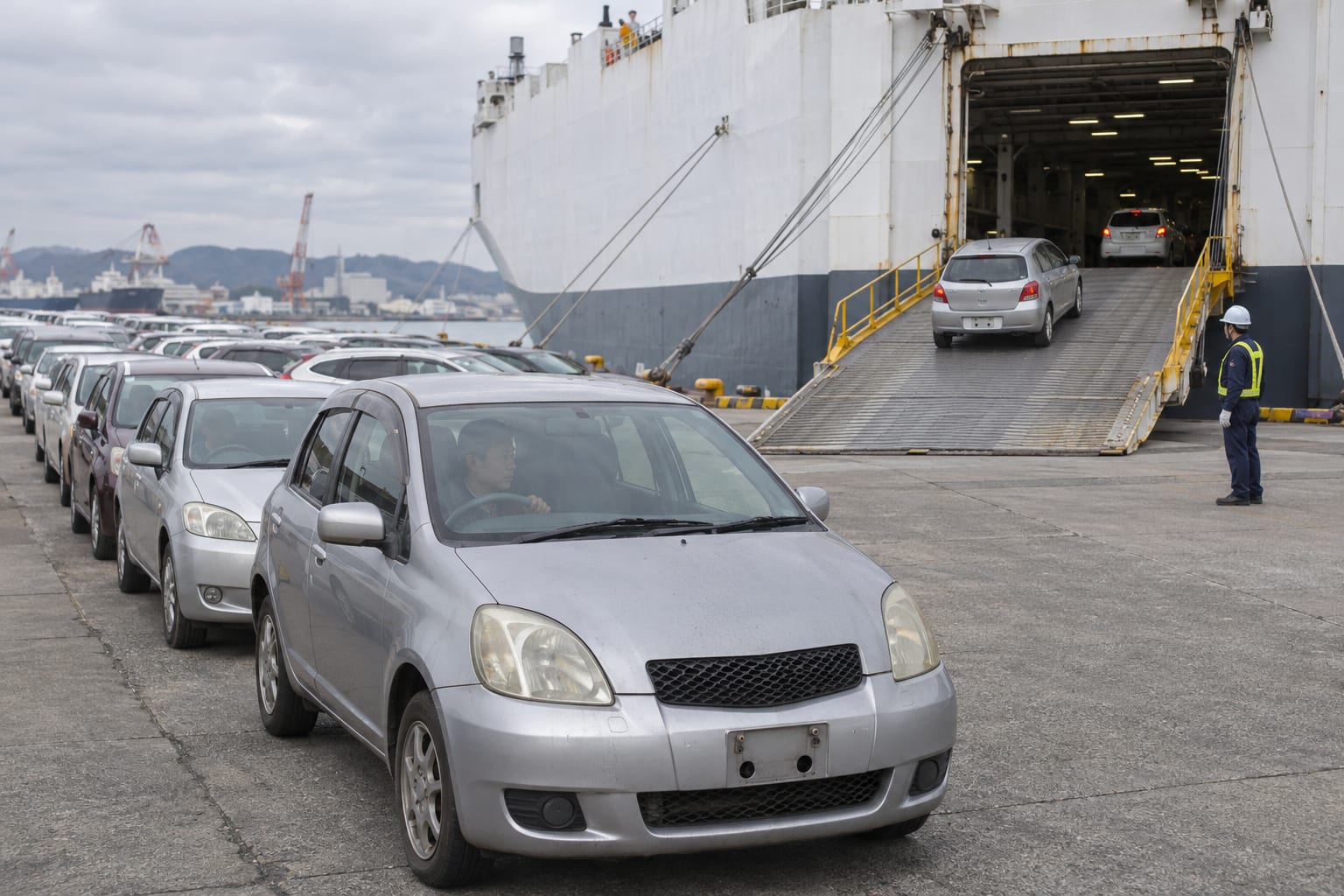 Illustration: Cars bound for Zimbabwe are driven onto a roll-on roll-off vessel in Japan and sail to Durban. Illustration.
Method and sources
What this does not show
ZimStat's US$2.8 million figure for September 2026 is a border value, not a count of cars or what buyers paid. It doesn't split new from used or show origin countries. Battery health, odometer and bodywork can only be judged from each car's own auction sheet and inspection report.