

Is Toyota Corolla Hybrid The Perfect Choice for Zimbabwean Drivers?
Read Our Blogs today and Learn More

The Corolla Hybrid looks attractive when fuel use and daily comfort matter. But a lower petrol bill is only one part of choosing an imported car in Zimbabwe.
Harare traffic can favour a hybrid system, while long trips to Bulawayo or Mutare demand comfort and predictable handling. Rough access roads, import rules and clearance costs can change the answer.
This guide checks the Corolla Hybrid against those real buying questions. It covers fuel economy, road suitability, hybrid condition, import eligibility, landed costs and Toyota alternatives.
Quick Answer
- The Corolla Hybrid suits Harare traffic and paved intercity driving.
- For the Japanese-market Corolla Touring ZWE211W, Toyota lists 29.0 km/L under WLTC and 35.0 km/L under JC08 for the Hybrid S and G-X grades. The Hybrid WxB is rated at 25.6 km/L WLTC and 30.8 km/L JC08, so confirm the exact trim before comparing fuel figures (Toyota 2021 Corolla Touring specification, 2021).
- It offers five-seat comfort, but less clearance than a crossover.
- Manufacture year affects both the ten-year import rule and possible surtax exposure.
Is the Toyota Corolla Hybrid good for everyday Zimbabwean driving?
For the Japanese-market Corolla Touring ZWE211W, Toyota lists 29.0 km/L under WLTC and 35.0 km/L under JC08 for the Hybrid S and G-X grades. The Hybrid WxB is rated at 25.6 km/L WLTC and 30.8 km/L JC08, so confirm the exact trim before comparing fuel figures. Those results make the car worth considering for urban commuting and paved highway travel, especially if you prefer a comfortable five-seat car (Toyota 2021 Corolla Touring specification, 2021).
A petrol-electric hybrid can use electric assistance at low speeds and recover energy while braking. That suits stop-start movement around Harare, where repeated braking would otherwise waste energy as heat.
The Corolla also feels more settled on longer paved trips than a very small hatchback. Its quiet operation, stable handling and familiar controls suit daily commuting, school runs and regular city-to-city travel.
The catch is road choice. If your normal route includes rough shoulders, deep sand or badly damaged access roads, ground clearance may matter more than fuel economy.
For a closer look at available body styles and model codes, review Toyota Corolla Hybrid listings in Zimbabwe. Always match the exact variant to your intended route.
The strongest case for this car is not that it suits every Zimbabwean driver. It is that it balances urban efficiency and highway comfort better than many smaller hybrids.
How fuel-efficient is the Corolla Hybrid?
For the Japanese-market Corolla Touring ZWE211W, Toyota lists 29.0 km/L under WLTC and 35.0 km/L under JC08 for the Hybrid S and G-X grades. The Hybrid WxB is rated at 25.6 km/L WLTC and 30.8 km/L JC08. These are separate test cycles, so neither figure is a guaranteed local fuel result (Toyota 2021 Corolla Touring specification, 2021).
WLTC combines urban, suburban and motorway-style conditions. JC08 is an older Japanese test method. The figures are useful for comparing test results, but they should not be treated as interchangeable.
Real consumption depends on traffic, speed, tyre pressure, air-conditioning, passengers, luggage and maintenance. Smooth acceleration and early braking can help the hybrid system work efficiently.
We did not locate a reliable Zimbabwe-specific Corolla Hybrid fuel study during preparation. That is why it would be misleading to promise a fixed litres-per-100-kilometres result or monthly saving.
| Test cycle | Official result |
|---|---|
| Grade | WLTC |
| --- | ---: |
| Hybrid S and G-X, FWD | 29.0 km/L |
| Hybrid WxB, FWD | 25.6 km/L |
Toyota’s 2021 Japanese-market figures for the Corolla Touring ZWE211W (Toyota 2021 Corolla Touring specification). WLTC and JC08 use different test methods.
Is the Corolla Hybrid practical on Zimbabwean roads?
In 2026, the shortlisted vehicle page records a wagon measuring 4,495 mm long, 1,745 mm wide and 1,460 mm high. That body shape is well suited to paved urban and intercity roads, but it does not make the Corolla an SUV for rough routes.
A lower wagon can feel stable and comfortable on smooth roads. It should work well for Harare commuting, highway travel and family use where the route is mostly paved.
Potholes, uneven shoulders and flood-damaged sections require more care. Tyre condition, suspension wear and underbody damage deserve close attention before payment.
Ground clearance varies by body style and model code. Do not apply a clearance figure from a Corolla Sedan or Corolla Cross to every Corolla Hybrid.
If you regularly drive rough rural approaches, compare a higher-riding option such as the Toyota C-HR. A crossover may give you more confidence, even if it offers less cargo flexibility.
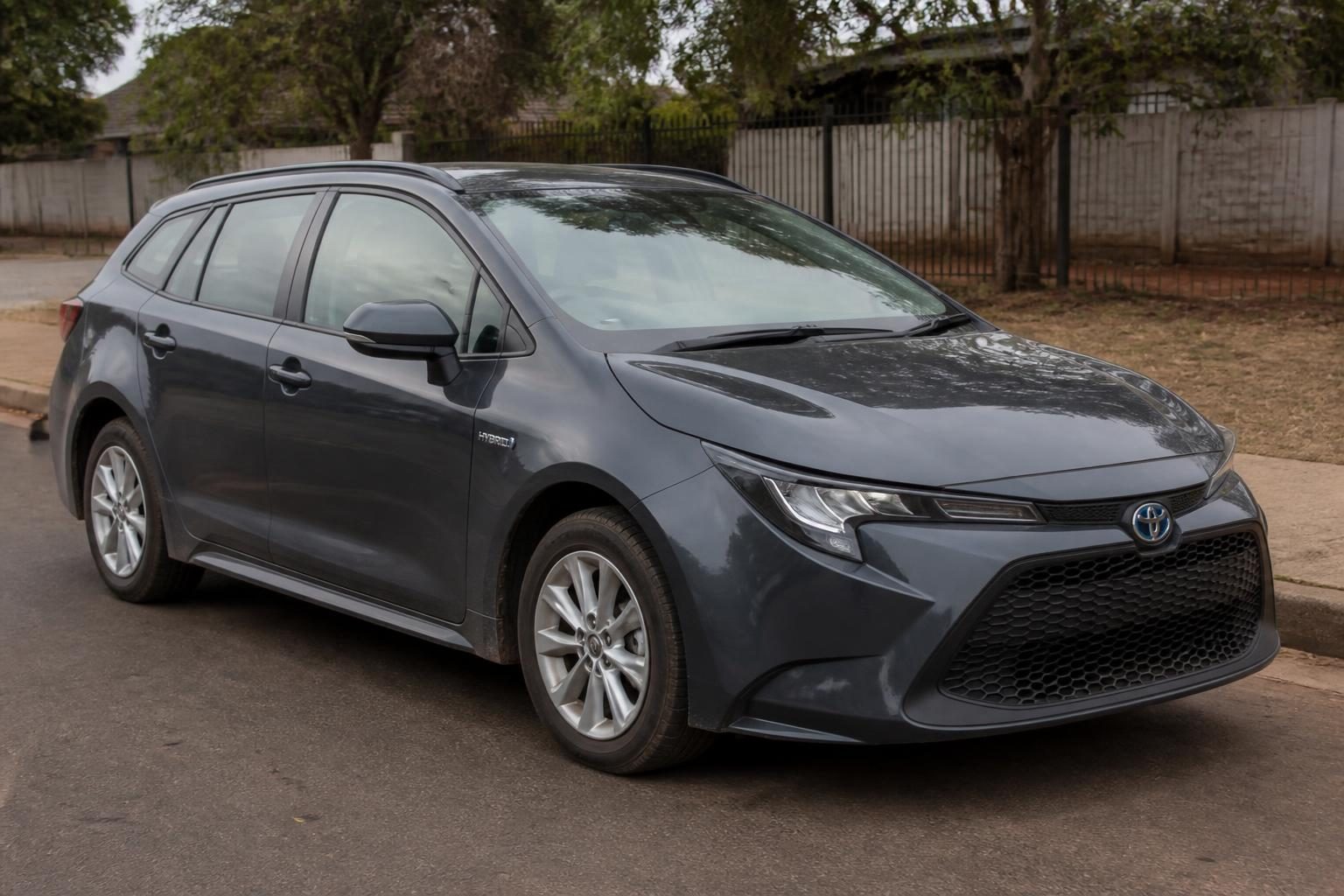 2021 Toyota Corolla
The main drawbacks of owning one
In 2026, the shortlisted Corolla page shows two condition reports, while ZIMRA guidance explains the VAT and valuation framework for imports. The Corolla Hybrid can be efficient, but inspection and landed costs still deserve careful attention (ZIMRA public notices, 2026).
The car may cost more to acquire than a smaller Toyota Aqua. It also offers less flexible space than a larger estate, people-mover or seven-seat vehicle.
Hybrid ownership still includes normal used-car risks. Check the exact manufacture date, model code, auction grade, odometer evidence, tyres, suspension, air-conditioning and underbody condition.
Look for hybrid warning lights and battery-related comments on the auction sheet. Confirm the inspection provider and certificate named on the final proforma invoice or current service terms. Do not assume that a hybrid badge proves battery health.
A high auction grade describes the vehicle’s assessed condition at inspection. It does not remove the need to read the detailed notes or confirm the drivetrain.
The vehicle amount is also not the final on-road cost. Shipping, customs duty, VAT, clearance and registration costs may sit outside it; VDP is the valuation base used in the customs calculation. ZIMRA defines VDP as CIF plus relevant incidental charges.
Can you import a Toyota Corolla Hybrid into Zimbabwe?
In 2026, ZIMRA identifies ten years from manufacture as the key private-import age limit, while passenger vehicles more than five years old may attract surtax. These two thresholds can make a newer vehicle worth considering after the full landed-cost assessment (ZIMRA, “Importation of Motor Vehicles by Private Individuals”, 2026; ZIMRA, “Calculation of Duty on Importation of Private Motor Vehicles”, 2026).
Zimbabwe generally prohibits the importation of used vehicles aged ten years or more from manufacture. Limited exemptions apply to defined categories, so do not assume that a general import licence will make an older Corolla eligible. Check the manufacture month and year, not only the registration year.
The five-year point is separate. A passenger car older than five years may face surtax, so an older bargain can become less attractive once customs costs are assessed.
ZIMRA may reassess a declared used-vehicle value if it does not reflect bona fide open-market value. Documents can include the invoice or sale agreement, police clearance, export bill of entry, registration book, freight statement and insurance statement.
Before committing, use this sequence:
- Confirm the exact manufacture date.
- Check ten-year private-import eligibility.
- Check possible five-year surtax exposure.
- Review the auction sheet and inspection report.
- Assess VDP, VAT and other landed costs.
- Plan customs clearance and local registration.
ZIMRA’s Public Notice 35 of 2026, published on 15 June 2026, also advises buyers to verify clearance details before paying for a locally advertised used vehicle (ZIMRA Public Notice 35 of 2026).
What the shortlisted 2021 Toyota Corolla Hybrid offers
In 2026, the 2021 Toyota Corolla Hybrid page records a 37,000-kilometre odometer reading and auction grade 4.5. It is a strong example for assessing a wagon body, hybrid system and import documentation together, rather than judging the Corolla badge alone.
2021 Toyota Corolla
The listing identifies a 2021 manufacture year, hybrid fuel type, ZWE211W model code, wagon body, five seats, automatic transmission and front-wheel drive. Its 1.8-litre 2ZR-FXE engine is the key powertrain detail.
The wagon shape should offer more useful luggage flexibility than a conventional sedan. Still, review the auction sheet, inspection notes, odometer evidence, tyre condition, suspension and underbody before payment. Confirm the exact manufacture month and which inspection documents are included on the final proforma invoice or current service terms.
How does the Corolla Hybrid compare with other Toyota options?
In 2026, a needs-based comparison across five Toyota options shows why no hybrid model suits every buyer. The Corolla prioritises balanced comfort, while smaller, taller or more spacious alternatives change the compromise.
| Option | Strongest reason to consider it | Main trade-off |
|---|---|---|
| Corolla Hybrid | Editorially, balanced comfort, efficiency and five-seat usability | Lower clearance and less flexible cargo space |
| Toyota Aqua | Editorially, compact city driving and a fuel-focused profile | Cabin and boot are smaller than the Corolla's, subject to exact variant |
| Toyota Prius | Editorially, hybrid efficiency with liftback access | Age and condition vary widely |
| Corolla Fielder Hybrid | Editorially, estate practicality for family luggage | Exact variant and condition need checking |
| Toyota C-HR Hybrid | Editorially, a higher-riding crossover format | Rear-seat and cargo flexibility may be less than expected |
As an editorial comparison, the Aqua may suit a buyer focused on compact urban use. The Prius offers liftback access, while the Fielder may favour luggage space. The C-HR may make more sense if a higher-riding format and crossover styling matter most. Check the exact model year and variant before treating these as specification conclusions.
Is the Corolla Hybrid the right fit for you?
Toyota’s 2021 Japanese-market specification lists five seats for the relevant Corolla Touring body and fuel results that vary by grade: 29.0 km/L WLTC for the Hybrid S and G-X, or 25.6 km/L WLTC for the Hybrid WxB. That combination suits urban and mixed-distance drivers, but not buyers who need high clearance or three rows (Toyota 2021 Corolla Touring specification, 2021).
It makes sense if you:
- Mostly drive in Harare or another built-up area.
- Use paved intercity roads regularly.
- Want lower petrol use without choosing a fully electric car.
- Prefer a comfortable five-seat wagon or sedan.
- Can budget separately for VAT, clearance and registration costs.
- Will inspect hybrid condition carefully.
Think twice if you:
- Regularly drive rough roads, sand or damaged access routes.
- Need seven seats or extensive cargo space.
- Want the lowest possible purchase cost.
- Prefer a high seating position.
How does the Japan-to-Zimbabwe import route work?
In 2026, the current vehicle guidance gives an estimated 24 to 34-day transit period for the Japan-to-Durban route. That is an estimate, not a fixed delivery promise, and the overland journey into Zimbabwe follows the seaport leg (2022 Toyota Corolla vehicle page).
The managed process begins with choosing a vehicle and reviewing its identity, reports, photographs and eligibility. Payment is arranged through an official proforma invoice. Carbarn’s terms state that 100% payment must be completed before shipment, so confirm the current terms before paying.
The route uses RoRo shipping from Japan to Durban, followed by overland transport into Zimbabwe. Clearance, VAT and other customs-related costs remain separate from the vehicle, shipping and inspection amount.
In the final service step, Carbarn’s managed Japan-to-Zimbabwe import process supplies Japan-sourced vehicles through Carbarn LLC, with two reports before payment, inspection and certification named in the final proforma invoice or current service terms, RoRo shipping to Durban, overland delivery into Zimbabwe, a dashboard for invoices, inspection reports, bill of lading, certificates and vessel tracking, plus bank-transfer or card payment options. Review the Toyota Corolla Hybrid listings in Zimbabwe, how the buying process works and the Zimbabwe import rules before payment.
The final verdict on the Toyota Corolla Hybrid
The Corolla Hybrid remains a strong choice for buyers who spend most of their time on paved roads and value five-seat comfort. Toyota’s 2021 specification rates the Corolla Touring ZWE211W at 29.0 km/L WLTC for Hybrid S and G-X grades, and 25.6 km/L WLTC for Hybrid WxB, so confirm the grade before relying on the figure. It is not the right fit for every Zimbabwean driver (Toyota 2021 Corolla Touring specification, 2021).
The best decision depends on manufacture date, body style, hybrid evidence, road conditions and full landed cost. If those factors fit, the Corolla Hybrid makes a lot of sense. If clearance, cargo space or entry cost matter more, compare the alternatives first.
Frequently Asked Questions (FAQs)

Related Cars


Jason Sildir
Passionate Automotive Blogger
I am a Turkish-Australian automotive writer with a passion for hybrid vehicles and rugged 4WD adventures. My writing combines detailed technical insights with a love for outdoor exploration and Aussie driving culture. Having guest posted for leading automotive sites, my mission is to educate and inspire drivers considering greener and tougher vehicle options.

Published Date
August 28, 2026