Harare traffic can make a compact hatchback very appealing. It can also expose the weaknesses of a car that is too cramped, thirsty or difficult to park.
Stop-start commuting, air-conditioning, tight parking spaces and family errands all place different demands on a small car. Manufacture year matters too, because Zimbabwe’s import rules can remove an otherwise attractive vehicle from your shortlist.
This guide compares the Toyota Aqua, Honda Fit, Toyota Vitz and Mazda Demio. It looks at fuel-saving potential, parking, cabin usefulness, drivetrain choice and import eligibility. Official fuel figures are labelled as JC08 or WLTC, because those test cycles should not be mixed. JC08 is Japan’s older fuel-economy test cycle, while WLTC is a newer cycle used in Japanese specifications.
Quick Answer
- Toyota Aqua: strongest fit for heavy stop-start traffic and fuel-saving potential.
- Honda Fit: best all-rounder for commuting, passengers and luggage.
- Toyota Vitz: a strong choice for easy parking and compact urban driving.
- Mazda Demio: suits buyers who want a compact petrol hatchback with a settled drive.
- Toyota lists the first-generation Aqua at 35.4 km/L on the JC08 test cycle (Toyota Motor Corporation, “TMC Launches ‘Aqua’ in Japan,” 2011.
What makes a hatchback suitable for Harare traffic?
The right Harare hatchback should be easy to position, simple to park and practical enough for your usual passengers. Toyota’s first-generation Aqua had a 4.8-metre minimum turning radius, according to Toyota’s 2011 launch release. That figure shows why turning space matters alongside overall length.
A short body helps in crowded streets, but visibility and steering response matter too. Automatic or hybrid drivetrains can reduce effort during repeated stops. Air-conditioning, tyre condition, road surfaces and driving style will still affect real fuel use.
If you mostly drive through the CBD, prioritise manoeuvrability and urban efficiency. Mixed city and highway use calls for better seating comfort and luggage space. Families should check rear-seat access before choosing the smallest car they can find.
For more city-car guidance, see our Zimbabwe car buying guides.
What makes the Toyota Aqua a strong fit for fuel-conscious city driving?
The Toyota Aqua makes the most sense for drivers who spend much of the week in stop-start traffic. Toyota’s first-generation model achieved 35.4 km/L on the JC08 test cycle, but that controlled result is not a promise of Harare consumption.
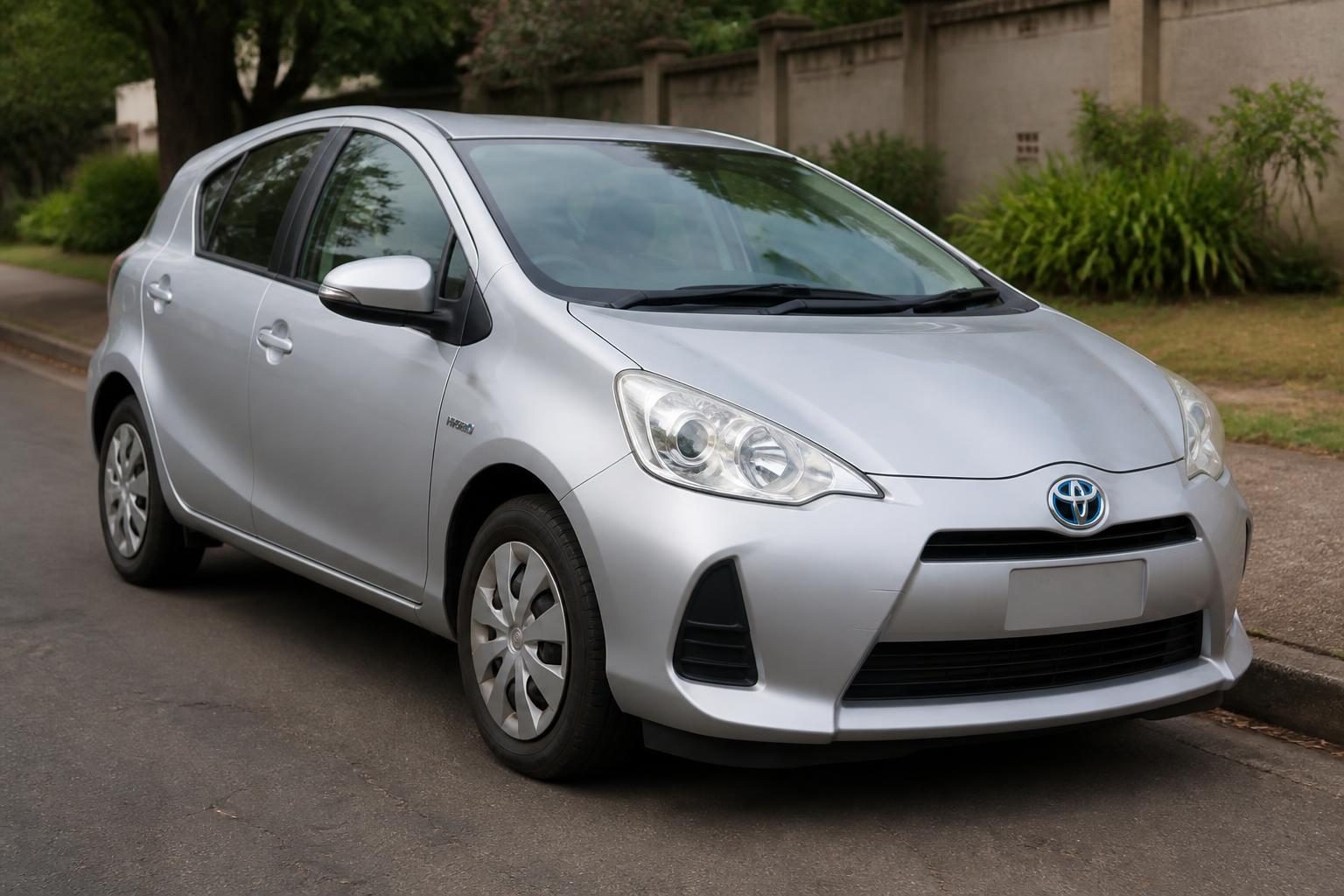 2019 Toyota Aqua
The selected 2019 example is an NHP10 hybrid with a 1,496 cc engine, front-wheel drive, automatic transmission and five seats. Toyota lists the engine at 54 kW, or 74 PS, with 111 Nm of engine torque; the hybrid system produces a stated combined maximum output of 73 kW. The example page records 77,000 km and auction grade 4 (2019 Toyota Aqua vehicle page, 2026). An auction grade is a Japanese auction assessment of a vehicle’s overall condition, not a guarantee of future performance.
Toyota’s official 2011 launch release lists the first-generation Aqua at 35.4 km/L on the JC08 cycle (Toyota Motor Corporation, “TMC Launches ‘Aqua’ in Japan,” 2011), while later catalogue figures use WLTC. The cycles measure fuel use differently, so compare like with like. The Aqua is worth a look if fuel matters most. Skip it if you want the simplest petrol drivetrain and do not want hybrid condition checked carefully.
Why choose the Honda Fit for all-round city driving?
The Honda Fit is probably the best fit for buyers who need one compact car for commuting, family errands and luggage. Honda Fit fuel economy varies by engine, drivetrain and test variant, so compare the exact Japanese specification rather than relying on one headline figure.
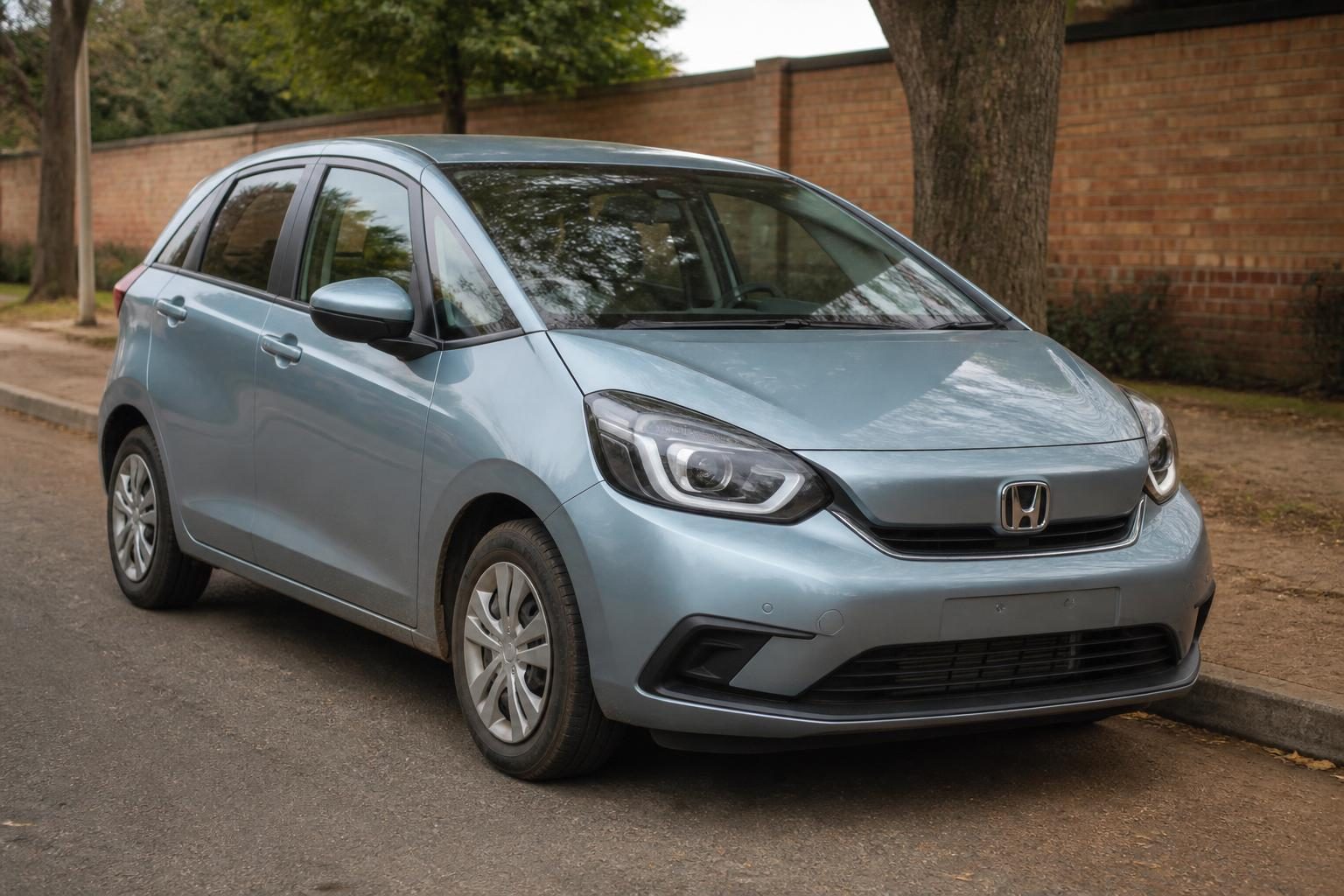 2021 Honda Fit
The selected 2021 example uses the GR3 model code, a 1,500 cc hybrid engine, front-wheel drive, automatic transmission and five seats. Its listed dimensions are 3,995 mm long, 1,695 mm wide and 1,515 mm high. The example page records 49,000 km and auction grade 4 (2021 Honda Fit vehicle page, 2026).
That difference matters. Petrol, hybrid, FF and 4WD specifications should never be merged into one generic Fit claim. Choose the Fit when rear-seat usefulness and cargo flexibility matter. Look elsewhere if your only priority is the smallest possible footprint.
Toyota Vitz: best for simple parking and urban positioning
The Toyota Vitz suits drivers who value a small footprint and straightforward parking more than maximum cabin flexibility. The 2017 Vitz Hybrid F has a 4.7-metre minimum turning radius, which supports easy positioning in tight urban spaces.
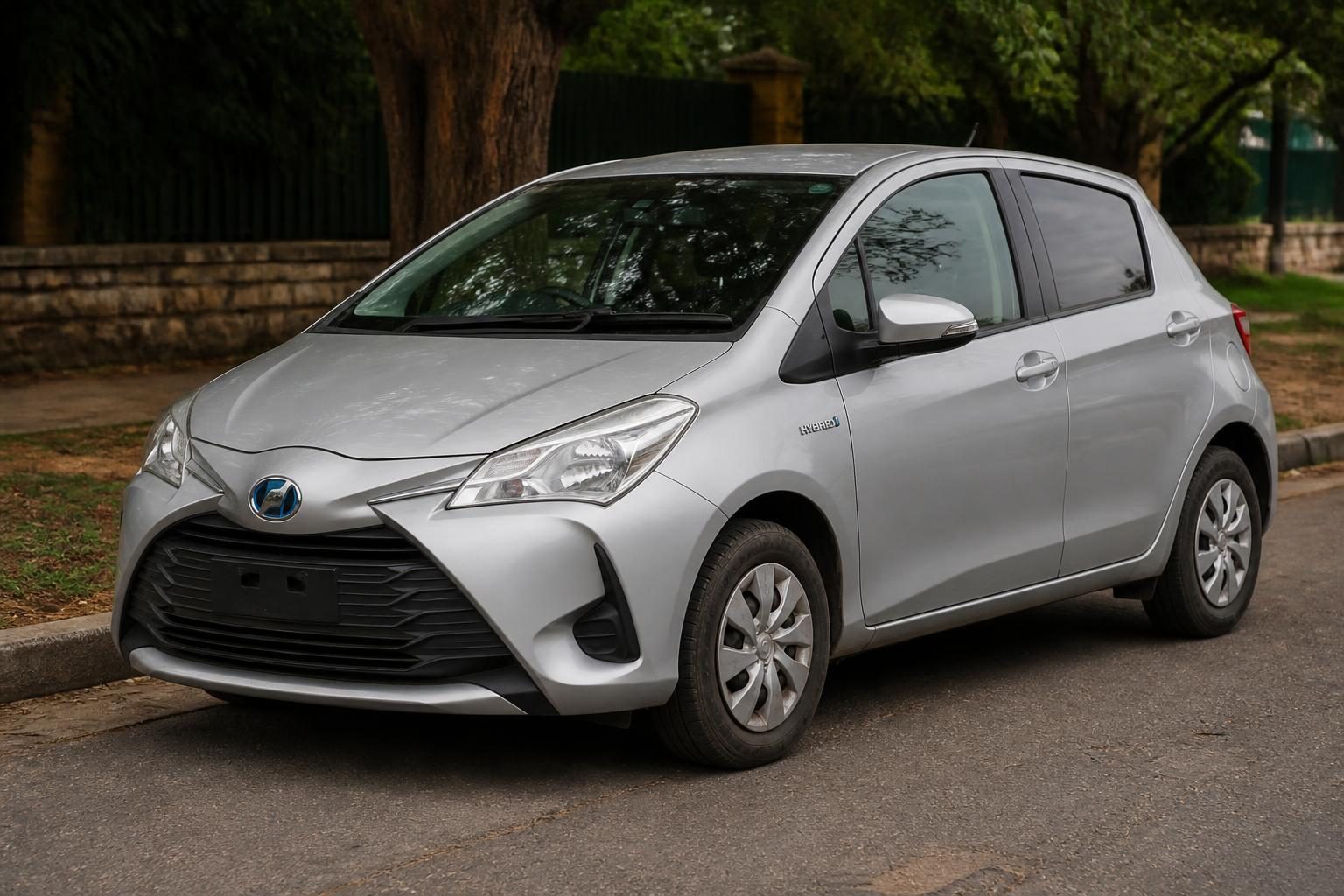 2017 Toyota Vitz
The selected NHP130 example is a 1,500 cc hybrid with front-wheel drive, an electric continuously variable transmission and five seats. Toyota lists 74 PS, 111 Nm and 34.4 km/L on the JC08 cycle for the Hybrid F. Its dimensions are 3,945 mm long, 1,695 mm wide and 1,500 mm high (Toyota Japan, “2017 Vitz Hybrid F vehicle information,” 2017).
The example page records 57,000 km and auction grade 4 (2017 Toyota Vitz vehicle page, 2026). The Vitz works well for solo drivers, couples and smaller households. Families carrying prams, large shopping loads or frequent luggage may find the Fit more useful.
Mazda Demio: best for a compact, settled drive
The Mazda Demio is a strong option for buyers who want a compact petrol hatchback with a more settled driving feel. The Demio’s fuel economy depends on the exact engine, transmission and test variant. Check the relevant Japanese Mazda specification before comparing it with hybrid models.
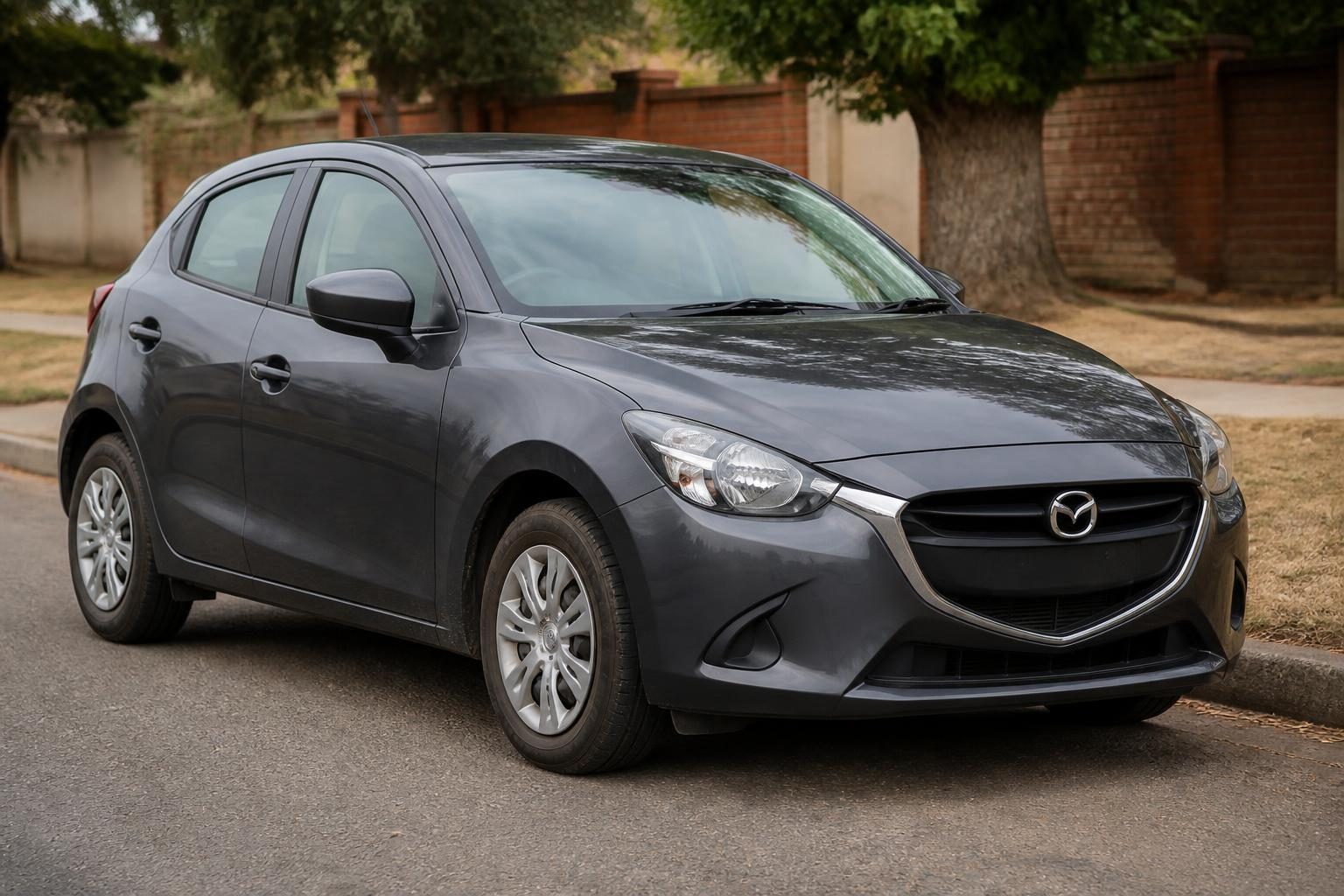 2017 Mazda Demio
The selected DJ3FS example has a 1,300 cc P3-VPS petrol engine, front-wheel drive, manual transmission and five seats. Toyota GAZOO’s catalogue lists 92 PS, 121 Nm and dimensions of 4,060 mm long, 1,695 mm wide and 1,525 mm high (Toyota GAZOO, “2017 Mazda Demio 13S catalogue,” 2017). The example page records 94,000 km and auction grade 4 (2017 Mazda Demio vehicle page, 2026).
The Demio’s compact body suits ordinary city parking, while its petrol drivetrain avoids hybrid-system questions. Its trade-off is clear: it may not match the Aqua’s urban efficiency or the Fit’s flexible cabin. Choose it when driving feel and petrol simplicity matter more than the lowest possible test-cycle figure.
Which hatchback fits your Harare routine?
The best choice depends on your routine, not one headline number. In this comparison, Toyota’s named Japanese variants include official JC08 figures of 34.4 to 35.4 km/L, according to Toyota Japan and Toyota Motor Corporation (Toyota Japan, “2017 Vitz Hybrid F vehicle information,” 2017; Toyota Motor Corporation, “TMC Launches ‘Aqua’ in Japan,” 2011). Honda and Mazda figures should be checked against the exact variant’s current Japanese specification. Those results are useful comparisons, not predictions of real Harare fuel use.
| Model |
Best suited to |
Main strength |
Main trade-off |
Eligibility check |
| Toyota Aqua |
Heavy urban traffic |
Hybrid fuel-saving potential |
Hybrid condition needs evidence |
Check manufacture date |
| Honda Fit |
Commuting and family use |
Cabin flexibility |
Variant differences |
Check year and drivetrain |
| Toyota Vitz |
Easy parking |
Compact dimensions |
Less flexible cabin |
Check exact grade |
| Mazda Demio |
Compact petrol motoring |
Settled driving feel |
Lower official figure than hybrids |
Check engine and transmission |
Editorial scorecard
This scorecard is an editorial assessment. It is not laboratory data, a reliability ranking or a maintenance-cost study.
| Model |
Manoeuvrability |
Fuel potential |
Cabin practicality |
Drivetrain simplicity |
| Toyota Aqua |
5/5 |
5/5 |
3/5 |
2/5 |
| Honda Fit |
4/5 |
4/5 |
5/5 |
3/5 |
| Toyota Vitz |
5/5 |
4/5 |
3/5 |
4/5 |
| Mazda Demio |
4/5 |
3/5 |
3/5 |
4/5 |
Selected official JC08 figures:
| Named factory variant |
Official figure |
| Toyota Aqua, first-generation launch figure |
35.4 km/L |
| Toyota Vitz Hybrid F NHP130 |
34.4 km/L |
The smallest hatchback is not automatically the cheapest city car. Cabin flexibility, hybrid evidence and import age can matter more than a small difference in body length or test-cycle fuel use.
Which Zimbabwe import rules should affect your choice?
Import eligibility should be checked before comparing features. In 2026, ZIMRA’s private vehicle guidance states that vehicles aged 10 years or more from their manufacture date should generally not be imported for private use, subject to defined statutory exceptions such as certain immigrant, inherited and antique or classic vehicle cases (ZIMRA, “Importation of Motor Vehicles by Private Individuals,” current guidance).
Use the actual manufacture date, not the registration year or model-name year. Older vehicles may fall into specific licensing categories, but an exception should never be assumed. Confirm your position with ZIMRA and the Ministry of Industry and Commerce.
The five-year threshold matters too. A surtax applies to passenger vehicles more than five years old at importation, with the calculation based on Value for Duty Purposes, or VDP. VDP means the customs value used when assessing import charges. Confirm the current VAT treatment with ZIMRA before you commit, because tax rules and transaction details can change.
That means a lower purchase price does not always produce a lower landed cost. Duty, VAT and customs-clearance costs are separate from the vehicle purchase price. Review the Zimbabwe vehicle import rules before choosing an older example.
How should you compare eligible hatchbacks?
An exact vehicle record is more useful than a model badge alone. Check the manufacture date, model code, engine, drivetrain, odometer, auction grade, auction sheet and inspection notes. The selected vehicle records provide starting points for that comparison.
No universal fuel promise can replace checking the exact car. A hybrid’s condition, a petrol engine’s service history, tyre pressures, air-conditioning use and Harare traffic can all change ownership results.
Read the Japan-to-Zimbabwe vehicle buying process for ordering, inspection, payment and shipping details.
Use the car specifications reference to compare detailed Toyota, Honda and Mazda information.
Carbarn operates the process from Japan, rather than through a Zimbabwe showroom. It provides the official Japanese auction sheet and an in-house inspection report before payment. It also arranges EAA pre-shipment inspection and certification, with dashboard access to invoices, reports, the bill of lading and vessel tracking.
Vehicles typically travel from Japan to Durban, often by RoRo, then overland into Zimbabwe. Listing pages show a typical transit estimate of about 24–34 days, but total delivery can take longer and is confirmed on the final quote.
The all-inclusive vehicle amount covers the vehicle, shipping and inspection. Duty, VAT and customs clearance are paid separately. Payment is made upfront by bank transfer or card through the official invoice. Vehicles are sold as-is with no stated manufacturer warranty, and no financing is provided. The Carbarn Zimbabwe import process also links each vehicle to its estimated landed-cost panel and current documentation.
Your shortlist should match your week. Choose the Aqua for fuel-conscious city use, the Fit for flexibility, the Vitz for compact parking or the Demio for petrol simplicity. Before deciding, confirm the manufacture date, exact variant, auction sheet and inspection evidence.