A cheap car can become expensive when parts are difficult to find, repairs are unfamiliar or the vehicle arrives in poor condition. In this guide, low-maintenance means reasonable parts access, a manageable drivetrain, a clear inspection history and servicing support you can find locally. That is why it means more than a simple purchase decision.
For Zimbabwean buyers, the sensible choice usually combines familiar servicing, a suitable drivetrain, reasonable fuel use and clear documentation. Harare traffic also demands something different from regular journeys between cities. No used car is maintenance-free, but some create fewer ownership complications.
This guide compares the Toyota Vitz, Suzuki Swift, Honda Fit, Toyota Aqua and Toyota Corolla Sport. The buyer-fit comments are editorial judgements based on the listed specifications, not independent reliability or maintenance rankings. It also explains how the 10-year import rule, manufacture date, auction grade and inspection history affect your decision.
Quick Answer
- Based on the listed specifications, the Toyota Vitz may suit compact city driving, but the example here is hybrid.
- The Suzuki Swift is the clearest petrol option in this comparison.
- The Honda Fit offers families more flexible cabin space.
- The Toyota Aqua may suit stop-start traffic when its hybrid system is checked properly.
- The supplied 2017 Aqua data lists up to 38.0 km/L JC08, a laboratory figure; no reachable manufacturer catalogue link is available for this supplied figure. These are use-case judgements, not proven low-maintenance rankings.
The Factors That Make a Used Car Low-Maintenance in Zimbabwe
In 2026, ZIMRA’s Importation of Motor Vehicles by Private Individuals guidance says vehicles aged 10 years or more from manufacture cannot normally be imported privately. A low-maintenance car must therefore be easy to service, well documented and eligible before you consider ownership costs.
Parts familiarity helps, but it should be checked rather than assumed. A small petrol engine may involve fewer hybrid-specific checks, but that is not universal: turbochargers, CVTs and emissions systems can also add complexity. A hybrid can still be a dependable choice when its battery and electronics receive proper diagnostics.
Transmission choice matters too. Confirm whether the exact vehicle uses a manual gearbox, conventional automatic, CVT or another system. Then compare the auction sheet with the separate inspection report. A high auction grade is useful evidence, but it cannot replace careful condition checks.
A newer car can sometimes make more sense overall than an older, cheaper-looking option. Zimbabwe’s surtax applies to passenger vehicles more than five years old, according to ZIMRA’s published vehicle-import guidance. That age threshold should be considered alongside repair risk and the available age buffer.
At-a-glance buyer-fit comparison
| Model |
Drivetrain focus |
City suitability |
Cabin space |
Specialist checks |
Highway suitability |
| Toyota Vitz |
Hybrid example; petrol variants are simpler |
High |
Moderate |
Hybrid checks for this example |
Moderate |
| Suzuki Swift |
Petrol manual |
High |
Moderate |
Gearbox and service checks |
Moderate |
| Honda Fit |
Hybrid example |
High |
High |
Hybrid and transmission checks |
Moderate to good |
| Toyota Aqua |
Hybrid |
Very high |
Moderate |
Battery and system diagnostics |
Moderate |
| Toyota Corolla Sport |
Hybrid |
Good |
Good |
Hybrid checks and specification-dependent servicing |
Good |
For more technical detail, use the Japanese car specifications reference database.
Small Hatchbacks for Different Daily Driving Needs
The supplied 2017 Fit data lists 26.0 km/L JC08 for a cited petrol grade and 33.6 km/L JC08 for a cited hybrid grade; no reachable manufacturer catalogue link is available for these supplied figures. The figures show why small hatchbacks suit urban driving, but the best choice still depends on drivetrain complexity, cabin needs and condition.
Toyota Vitz: A Possible Urban Fit
The Toyota Vitz makes a lot of sense for a first-time buyer who mostly drives around Harare. Its compact 3,945 mm body is easy to place in traffic and parking areas, while five seats and a folding rear seat give it useful everyday flexibility.
The supplied 2017 example is a hybrid NHP130 with a 1.5-litre inline-four engine, automatic CVT, front-wheel drive and five seats. Its vehicle page records 57,000 kilometres and auction grade 4. Check the hybrid battery, warning lights, CVT behaviour, air-conditioning and suspension before payment.
Choose it if: You mainly commute in town and want a compact hatchback.
Skip it if: You regularly carry a large family or bulky luggage.
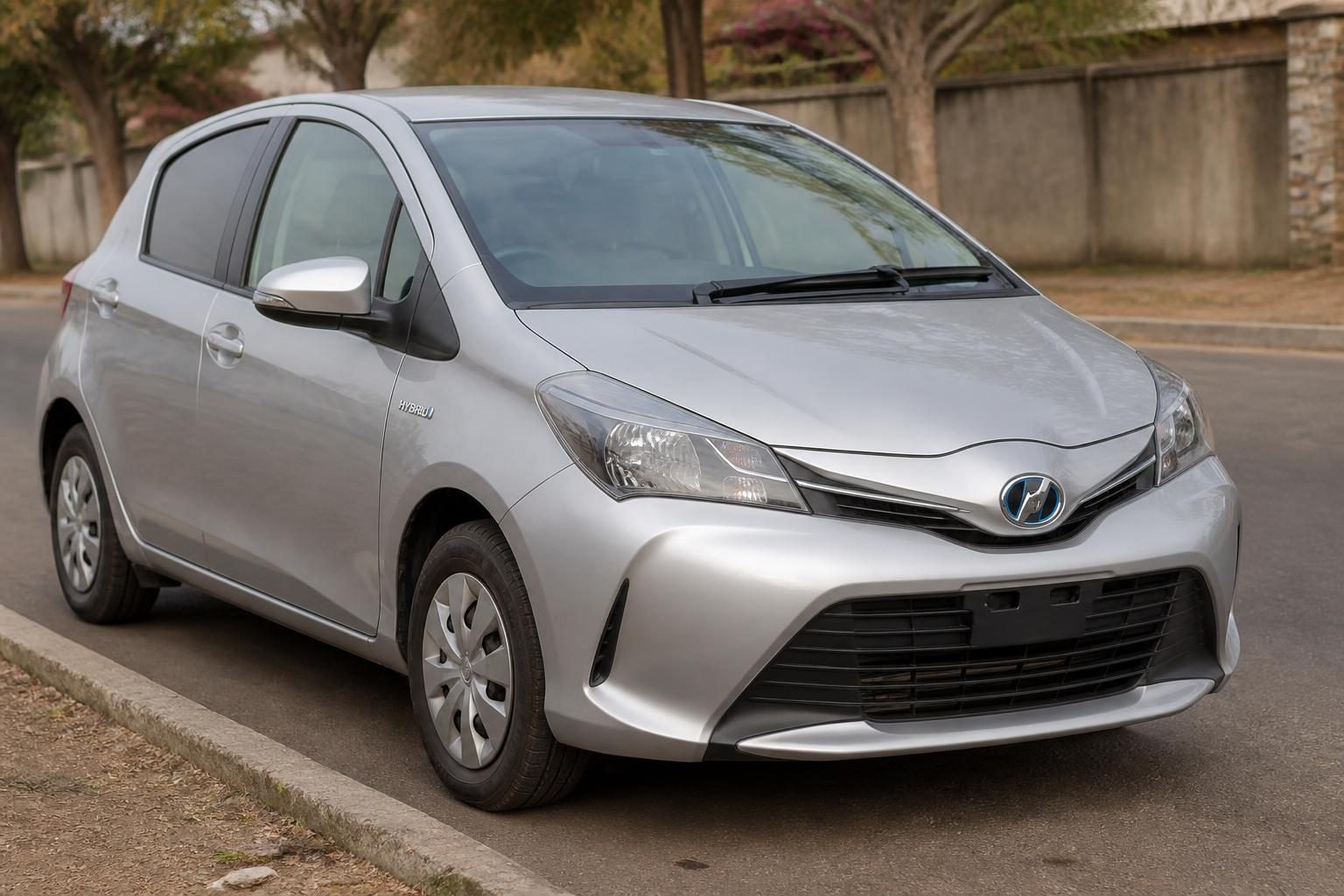 2017 Toyota Vitz
Suzuki Swift: The Straightforward Petrol Alternative
The 2018 Suzuki Swift is the clearest choice here for buyers who prefer a petrol drivetrain. It is small enough for busy Harare roads, but its five-seat cabin remains practical for commuting, errands and occasional family use.
This example uses the ZC83S model code, a 1.2-litre K12C petrol engine, manual transmission and front-wheel drive. The vehicle page records 31,000 kilometres and auction grade 4.5. Check clutch operation, suspension, air-conditioning, service records and any accident-repair notes. Its simpler layout avoids hybrid-system checks.
Choose it if: You want a small petrol commuter with straightforward controls.
Skip it if: You need maximum rear-seat flexibility or frequent long-distance luggage space.
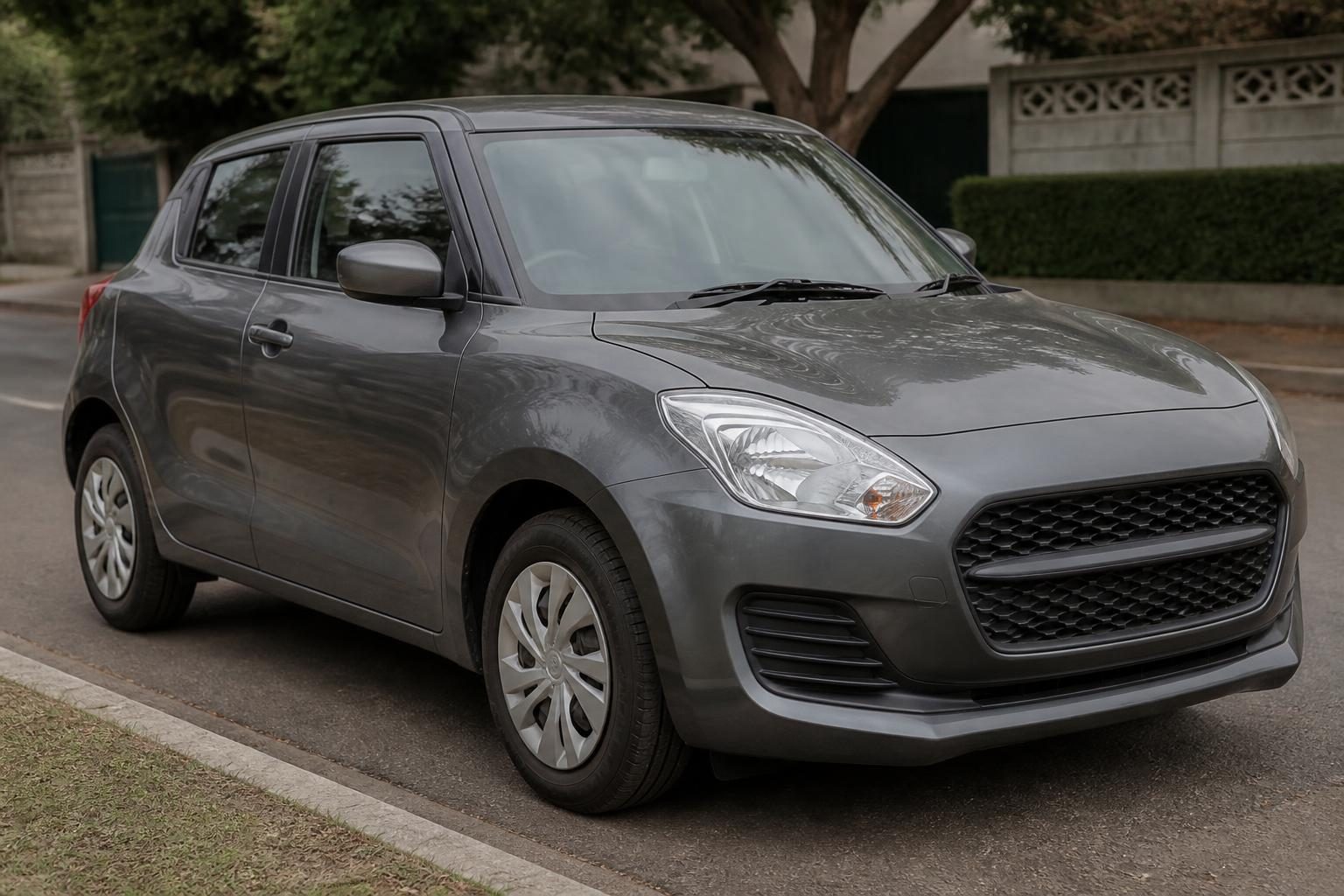 2018 Suzuki Swift
Honda Fit: A Practical Small-Car Option
The Honda Fit is probably the strongest small-car option for buyers who need useful family space. Its flexible rear seating and tall cabin make it feel more accommodating than its exterior size suggests. That matters when you need to carry passengers, shopping or luggage.
The supplied 2018 example is a hybrid GP5 with a 1.5-litre LEB engine, automatic transmission, front-wheel drive and five doors. It records 109,000 kilometres and auction grade 3.5. The supplied 2017 Fit data lists 26.0 km/L JC08 for a petrol grade and 33.6 km/L JC08 for a hybrid grade; no reachable manufacturer catalogue link is available for these supplied figures. These are laboratory values, not guaranteed Zimbabwe consumption.
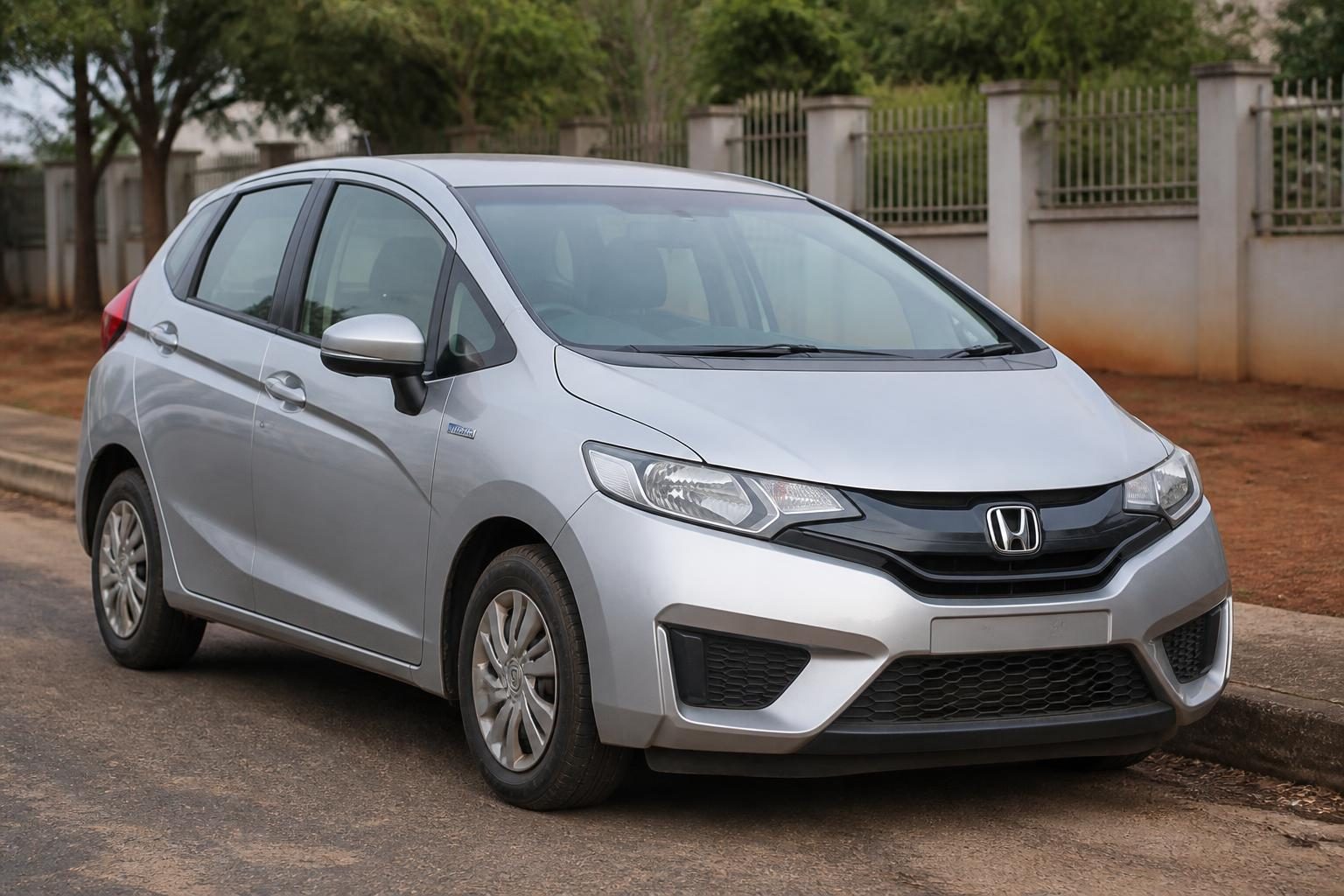 2018 Honda Fit
Is the Toyota Aqua Worth the Hybrid Checks?
The supplied Aqua data lists up to 38.0 km/L JC08 for a cited 2017 grade, depending on specification; no reachable manufacturer catalogue link is available for this supplied figure. The Aqua is therefore a strong fit for stop-start Harare traffic, but its low fuel-use potential does not remove the need for battery and electronic checks.
The supplied 2022 Aqua is an MXPK11 hybrid with a 1.5-litre M15A-FXE engine, automatic transmission, front-wheel drive and five seats. Its vehicle page records 104,000 kilometres and auction grade 3.5. Confirm battery condition, hybrid-system diagnostics, cooling-fan cleanliness, warning lights and service history before payment.
Real-world consumption will vary with traffic, road condition, load, tyre pressure and air-conditioning use. The Aqua is not automatically expensive to maintain, but buyers should confirm that a suitably trained technician and appropriate diagnostic support are available for hybrid-system work.
When comparing similar hatchbacks, the report quality often matters more than the badge. A well-documented car with clear condition notes can be a safer ownership decision than a famous model with uncertain history.
Choose it if: You spend much of your time in stop-start traffic.
Skip it if: You want the least specialised petrol drivetrain possible.
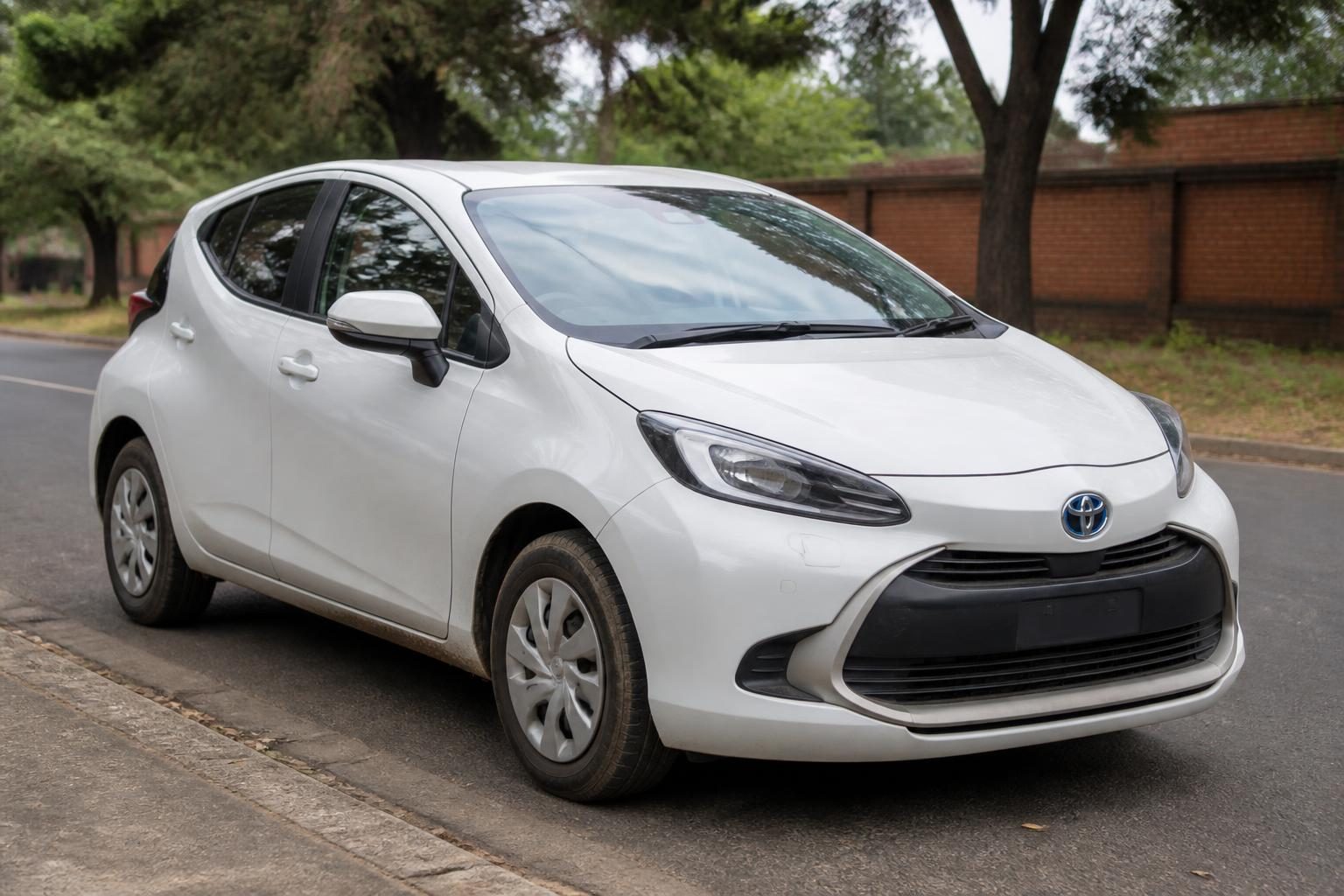 2022 Toyota Aqua
Does the Toyota Corolla Sport Make Sense for Family and Highway Use?
The supplied 2018 Toyota Corolla Sport vehicle page records a 1.8-litre hybrid hatchback with 94,000 kilometres, five seats and auction grade 4. Based on those listed specifications, it may suit buyers who value family space, luggage room and long highway comfort more than choosing the smallest possible drivetrain.
The example uses the ZWE211H model code, a 2ZR-FXE inline-four engine, automatic transmission and front-wheel drive. Its larger hatchback format may mean higher costs for items such as tyres or suspension parts than a smaller car, depending on the exact specification and parts supply.
The Corolla Sport is not the lowest-complexity choice here. Its possible advantage is balance, with more space and calmer long-distance manners than the smaller hatchbacks, without moving to a large SUV. Compare the exact engine, hybrid system, tyres, suspension and service history before choosing.
Choose it if: Family space and highway comfort matter most.
Skip it if: Your priority is the smallest and simplest city car.
How Do You Choose the Lowest-Risk Example?
ZIMRA’s published vehicle-import guidance confirms that VAT is charged at 15%, while the Value for Duty Purposes includes CIF and other applicable charges. Choosing the lowest-risk example means checking the vehicle, its documents and its import costs together.
Use this checklist before committing:
- Confirm the year and month of manufacture.
- Check the normal 10-year import limit.
- Review the official Japanese auction sheet.
- Compare it with the separate inspection report.
- Check odometer consistency.
- Look for accident, flood, corrosion or repair notes.
- Confirm the engine, transmission and hybrid variant.
- Check warning lights and service history.
- Confirm what vehicle, shipping and inspection charges include.
- Review the vehicle page’s landed-cost estimate.
ZIMRA says VDP includes CIF plus charges such as port handling, storage and special handling fees. It also says surtax applies to passenger vehicles more than five years old. Do not rely on a guessed total, especially when the vehicle’s manufacture month affects eligibility.
Vehicles aged 10 years or more from the date of manufacture are generally prohibited for private import, subject to limited statutory exceptions. Certain qualifying immigrant, inherited, diplomatic, antique or classic vehicles may require an import licence or additional approval. The Ministry of Industry and Commerce import licence guidance explains the application process, while ZIMRA’s private vehicle guidance covers declarations and valuation.
Buyer-fit summary
- Possible urban fit: Toyota Vitz, with hybrid checks for this example.
- Straightforward petrol choice: Suzuki Swift.
- Practical small-car option: Honda Fit.
- Possible fit for stop-start traffic: Toyota Aqua.
- Likely fit for family space and highway use: Toyota Corolla Sport, based on its listed size and specification.
- Lowest-risk principle: Choose the best-documented example that matches your use and import eligibility; this is a buying principle, not a proven reliability ranking.
What Should a Managed Japan-to-Zimbabwe Process Include?
ZIMRA requires accurate vehicle declarations, and Carbarn’s process information gives buyers two reports before payment. A managed import should therefore make the vehicle condition, inspection stage, shipping route and separate customs costs clear from the beginning.
Expect to review the auction sheet, inspection report, manufacture date, model code and exact vehicle specification. You should also understand the route from Japan to Durban, followed by overland transport into Zimbabwe. The typical delivery estimate is about 24 to 34 days, not a guaranteed arrival date.
The process should also provide shipment documents and progress updates. Ask which documents and vessel information will be available to you, and how you will access the invoice and bill of lading. Duty, VAT and customs clearance remain separate costs, so use the Zimbabwe import rules and landed-cost guidance before making a decision.
Carbarn describes its listed vehicles as Japan-based imports and provides the official Japanese auction sheet plus an in-house inspection report before payment. A pre-export conformity certificate from an approved CBCA service provider may be required for regulated imports. Carbarn ships vehicles from Japan to Durban and transports them overland into Zimbabwe. Buyers can use the self-service dashboard for invoices, inspection documents, the bill of lading, certificates and vessel tracking. Payment is arranged through the official invoice by bank transfer or card. The vehicle, shipping and inspection amount excludes duty, VAT and customs-clearance costs.
Which Low-Maintenance Used Car Should You Choose?
ZIMRA’s 10-year manufacture-date rule means eligibility comes before any reliability ranking. For compact urban use, the Toyota Vitz is a strong starting point based on its size, although this example is hybrid. The Swift may suit a straightforward petrol preference, while the Fit offers flexible cabin space.
The Aqua may suit heavy city traffic when its hybrid system is properly assessed. The Corolla Sport may suit buyers who value family space and highway comfort, based on the listed specification. These are use-case judgements, not independent reliability or maintenance rankings. In every case, condition, documentation and the correct drivetrain matter more than the badge alone.